
How do pneumatic actuators realize valve opening and closing?
2026-08-07 مدونة
How Do Pneumatic Actuators Realize Valve Opening and Closing?
Basic Working Principle of Pneumatic Actuators
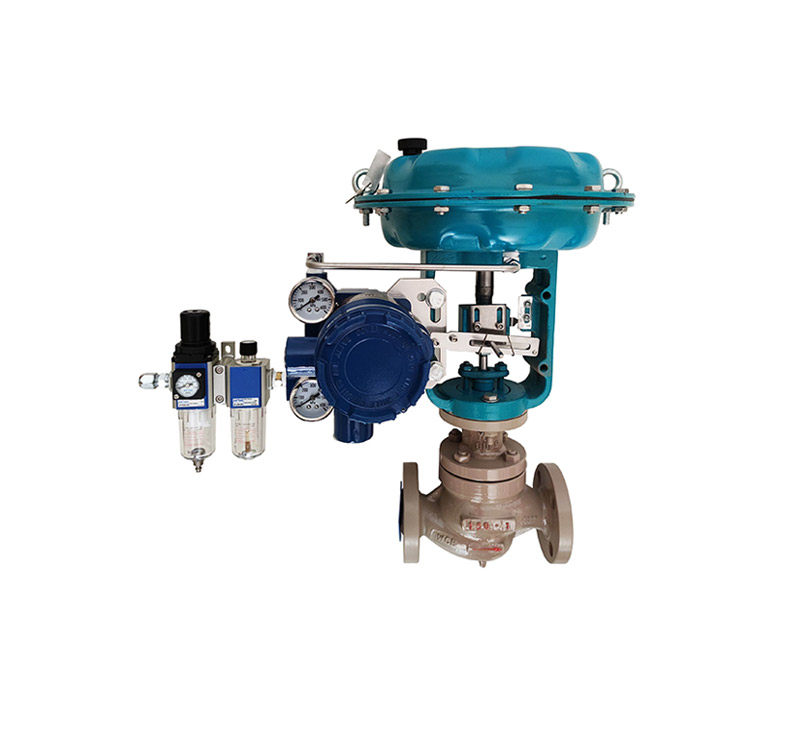
First of all, pneumatic actuators convert compressed air energy into mechanical motion. In fact, this motion directly drives the valve stem to open or close industrial valves. For example, when air enters one side of the actuator chamber, it pushes the internal piston or diaphragm forward. As a result, the connected valve stem moves in a linear or rotary direction. Meanwhile, air on the opposite side exhausts through a control port to allow smooth movement. In short, compressed air serves as the clean, reliable power source for the entire actuation cycle.
Key Components That Drive Valve Motion
Furthermore, several core components work together to achieve precise valve operation. First, the actuator housing contains either a piston or a diaphragm as the primary moving element. Second, the valve stem connector links the actuator output to the valve stem itself. Third, springs inside the actuator provide return force when air pressure releases. Additionally, seal rings prevent air leakage and maintain consistent pressure during operation. Finally, position sensors or limit switches confirm the actual valve position for control systems.
Linear vs Rotary Pneumatic Actuation Mechanisms
Similarly, two main actuation types serve different valve designs across industries. On one hand, linear pneumatic actuators produce straight-line motion for globe and gate valves. Specifically, the piston moves up and down inside a cylinder to lift or lower the valve plug. On the other hand, rotary pneumatic actuators deliver quarter-turn motion for ball and butterfly valves. For instance, rack-and-pinion or scotch yoke mechanisms convert linear piston force into rotational torque. Consequently, each actuator type matches the mechanical requirements of its corresponding valve style.
Air Supply and Control System Integration
Moreover, external control systems regulate air flow to determine valve position accurately. First, a solenoid valve receives electrical signals from the process controller. Then, it directs compressed air into the appropriate chamber of the pneumatic actuator. Meanwhile, pressure regulators maintain stable input air pressure between 40 and 100 psi. In addition, positioners fine-tune air supply for intermediate valve positions beyond fully open or closed. As a result, operators achieve precise throttling control for various fluid process applications.
Fail-Safe Features in Industrial Applications
Importantly, pneumatic actuators include built-in fail-safe mechanisms for critical process scenarios. For example, spring-return actuators automatically close or open valves when air supply fails. In fact, this feature protects equipment and personnel in emergency shutdown situations. Alternatively, double-acting actuators hold their last position if air pressure drops unexpectedly. Furthermore, manual override handwheels allow operators to adjust valves during maintenance or power loss. Above all, these safety features make pneumatic actuators suitable for hazardous industrial environments.
Benefits for Process Control Industries
Finally, pneumatic actuators deliver unique advantages across multiple industrial sectors. Compared with electric or hydraulic alternatives, they offer fast response times and simple installation. Also, they operate reliably in extreme temperature ranges and explosive atmospheres with proper certification. In addition, compressed air systems remain widely available in most manufacturing and processing facilities. For petroleum, chemical, and water treatment plants specifically, they provide cost-effective valve automation solutions. Therefore, pneumatic actuators remain the preferred choice for reliable valve opening and closing in modern industrial processes.
المنتجات الأكثر مبيعًا

اتصل بنا
العنوان: الغرفة 203-1، الطابق الثاني، المبنى أ، رقم 9 شارع شينتشين، منطقة شينوو، مدينة ووشي، مقاطعة جيانغسو، جمهورية الصين الشعبية
الهاتف المحمول: 0086-188-5271-7918
Email:william@wxaccton.com
الموقع الإلكتروني: www.actuator-china.com