
Hydraulic Actuator vs Pneumatic Actuator: Pros, Cons & Key Differences
2026-10-26 الأخبار
Hydraulic actuators and pneumatic actuators are two widely used fluid power actuators in industrial automation, valve control, manufacturing machinery and process systems. Both convert fluid pressure energy into linear or rotary mechanical motion, yet they perform very differently because one relies on incompressible hydraulic oil and the other uses compressible compressed air. Understanding their pros and cons helps engineers and plant managers select the right actuator and avoid costly design mistakes.
Hydraulic actuators stand out for outstanding force density and stable load holding capability. Working pressure normally ranges from 100 bar to 350 bar, so they can deliver huge torque or thrust within a compact housing. Since hydraulic oil is nearly incompressible, hydraulic actuators maintain rigid positioning under changing loads and support accurate modulating control. They are the preferred option for heavy-load equipment such as large pipeline valves, metallurgical presses, construction machinery and offshore process valves. Hydraulic systems also hold steady force at mid-stroke without continuous energy input once pressure is locked. However, hydraulic solutions carry clear downsides. The whole system needs pumps, oil tanks, filters, coolers and complex piping. Hydraulic oil leakage risks create contamination, fire hazards and regular maintenance work. Initial investment and ongoing upkeep costs are higher than pneumatic setups.
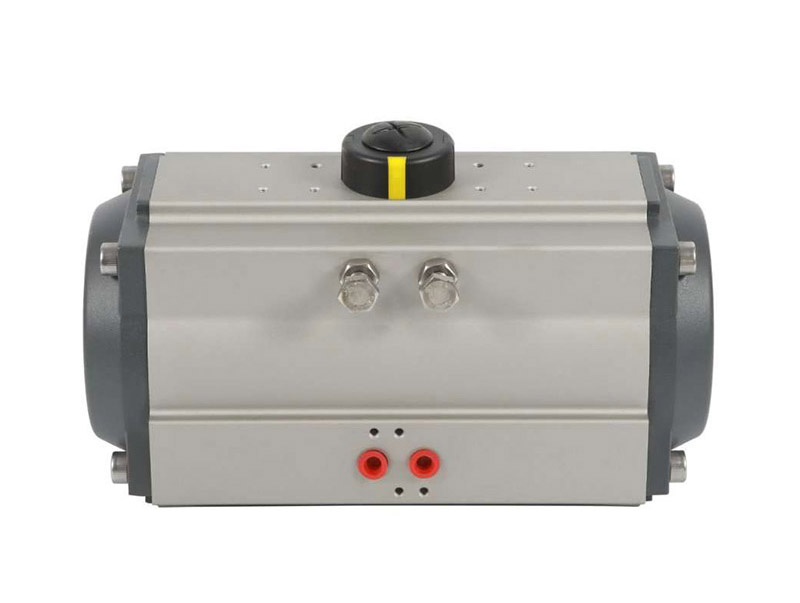
Pneumatic actuators run on compressed air at 4 to 10 bar. Their biggest strengths are simple structure, low purchase cost and fast cycle response. Air supply is easy to route in most factories, and air exhaust creates no pollution. Spring-return pneumatic actuators provide reliable fail-safe action, which makes them popular for emergency shutdown valves and on/off control in explosive or flammable zones, as they do not generate electric sparks. Assembly lines, packaging machines and small process valves commonly adopt pneumatic actuators for fast repetitive strokes. The main weakness comes from air compressibility. Positioning accuracy drops sharply under variable loads, and fine modulating control is hard to achieve. Compressed air systems have low overall energy efficiency; hidden air leaks push up long-term operating expenses. Pneumatic actuators also cannot produce high force without an oversized cylinder.
When choosing between hydraulic and pneumatic actuators, match the actuator performance to your process requirements. Choose hydraulic actuators if you need high force, precise modulation, heavy load holding and stable positioning. Go for pneumatic actuators for fast on-off cycling, budget-limited projects, explosion-proof environments and light-to-medium load duties. Neither type is universally superior. The best selection balances output force, positioning demand, safety rules, maintenance capacity and total ownership cost.
المنتجات الأكثر مبيعًا

اتصل بنا
العنوان: الغرفة 203-1، الطابق الثاني، المبنى أ، رقم 9 شارع شينتشين، منطقة شينوو، مدينة ووشي، مقاطعة جيانغسو، جمهورية الصين الشعبية
الهاتف المحمول: 0086-188-5271-7918
Email:william@wxaccton.com
الموقع الإلكتروني: www.actuator-china.com